Head Port Calibration
The Science of Flow: Why N54 Calibration Is Mandatory After Head Porting
Porting the BMW N54 cylinder head (or swapping to an N53 head) can transform how the engine breathes. Flow gains are real—but the moment airflow changes, every assumption in the existing tune becomes wrong.
This guide explains, from a calibration standpoint, why a full retune is mandatory (not optional) after head porting or an N53 head swap.
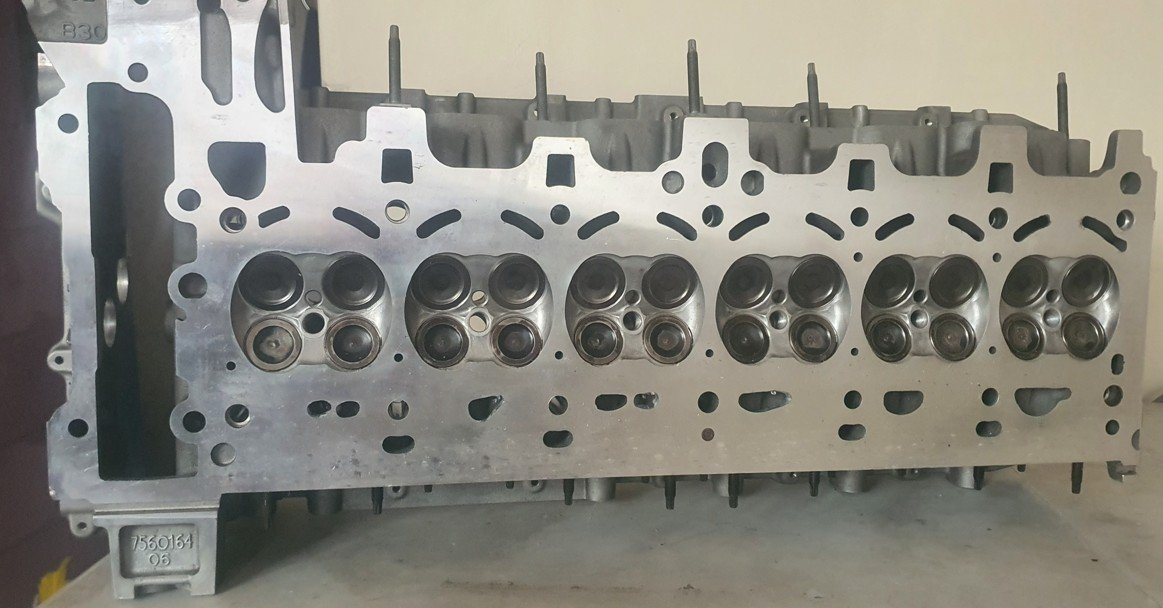
1) What porting changes in an N54 head
Porting and valve work don’t just “smooth runners”—they change port cross-section, short-side behavior, seat efficiency, and the pressure/flow relationship the DME relies on for load and torque prediction.
2) Why your old tune no longer matches reality
The N54 DME is torque-based and model-driven. When head flow changes, the relationship between boost/throttle and air mass changes. If you don’t recalibrate, you get:
- Incorrect load/torque calculation
- Fueling errors at high load (especially open-loop)
- Timing lookups that are wrong for the new cylinder pressure
- Boost control behavior that no longer matches WGDC tables
3) Fueling: why trims aren’t enough
Closed-loop trims can look “fine” while WOT goes leaner than commanded because many performance regions run open-loop. After headwork, you must re-scale airflow/load and validate lambda under load.
4) Ignition timing and knock
More airflow at the same boost usually means more cylinder pressure. Timing that was safe on a stock head can be too aggressive near peak torque after porting. Proper calibration re-finds MBT where appropriate and rebuilds the timing map with safe knock margins.
5) Exhaust flow and boost control
Better exhaust flow lowers drive pressure and changes turbine efficiency. That changes how the turbo responds to wastegate duty—so WGDC and boost PID tuning must be redone to keep boost stable and safe.
6) Why the DME won’t “just learn it”
Adaptation is designed for small OEM-envelope drift, not major hardware changes. After head porting or an N53 swap, you need a real calibration pass.
7) Synergy BMW Tuning process after headwork
We treat headwork like a turbo upgrade from a calibration standpoint:
- Rebuild air model / load scaling
- Validate fueling (LPFP/HPFP/injector duty)
- Re-map timing with knock analysis
- Retune boost control and (as needed) VANOS targets
- Validate on real-world, heat-soaked logs
If you want a data-driven plan, start with custom N54 remote tuning or a post-headwork log review:
FAQ
Pick your platform, select your hardware stage, add what you need, and checkout to start intake immediately.
Get a Quote →