Flow Bench Comparison
BMW N54 Head Flow: Stock vs Ported vs N53 Swap
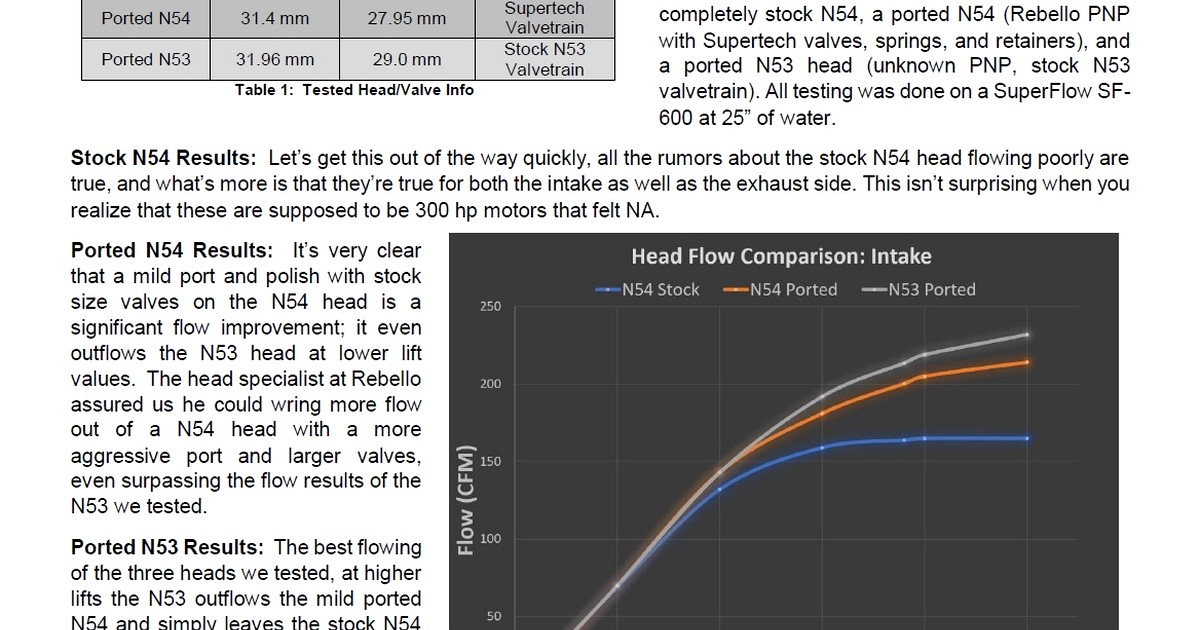
Once your N54 is full bolt‑on and well tuned, the next meaningful gains are often in the cylinder head. This post consolidates SuperFlow SF‑600 flow-bench results (25" of water) comparing:
- Stock N54 head
- Mild ported N54 head (stock valve sizes)
- Mild ported N53 head
It also includes port-entry measurements and practical guidance on cams/lift and power goals.
Test setup
All three heads were tested back‑to‑back on a SuperFlow SF‑600 at 25" of water using the same fixtures so the curves reflect the hardware differences rather than setup variance.
Head and valve size comparison
| Head | Intake valve | Exhaust valve | Notes |
|---|---|---|---|
| Stock N54 | 31.4 mm | 27.95 mm | Stock N54 valvetrain |
| Ported N54 | 31.4 mm | 27.95 mm | Mild port & polish; upgraded valvetrain |
| Ported N53 | 31.96 mm | 29.0 mm | Mild port; stock N53 valvetrain |
Intake flow comparison
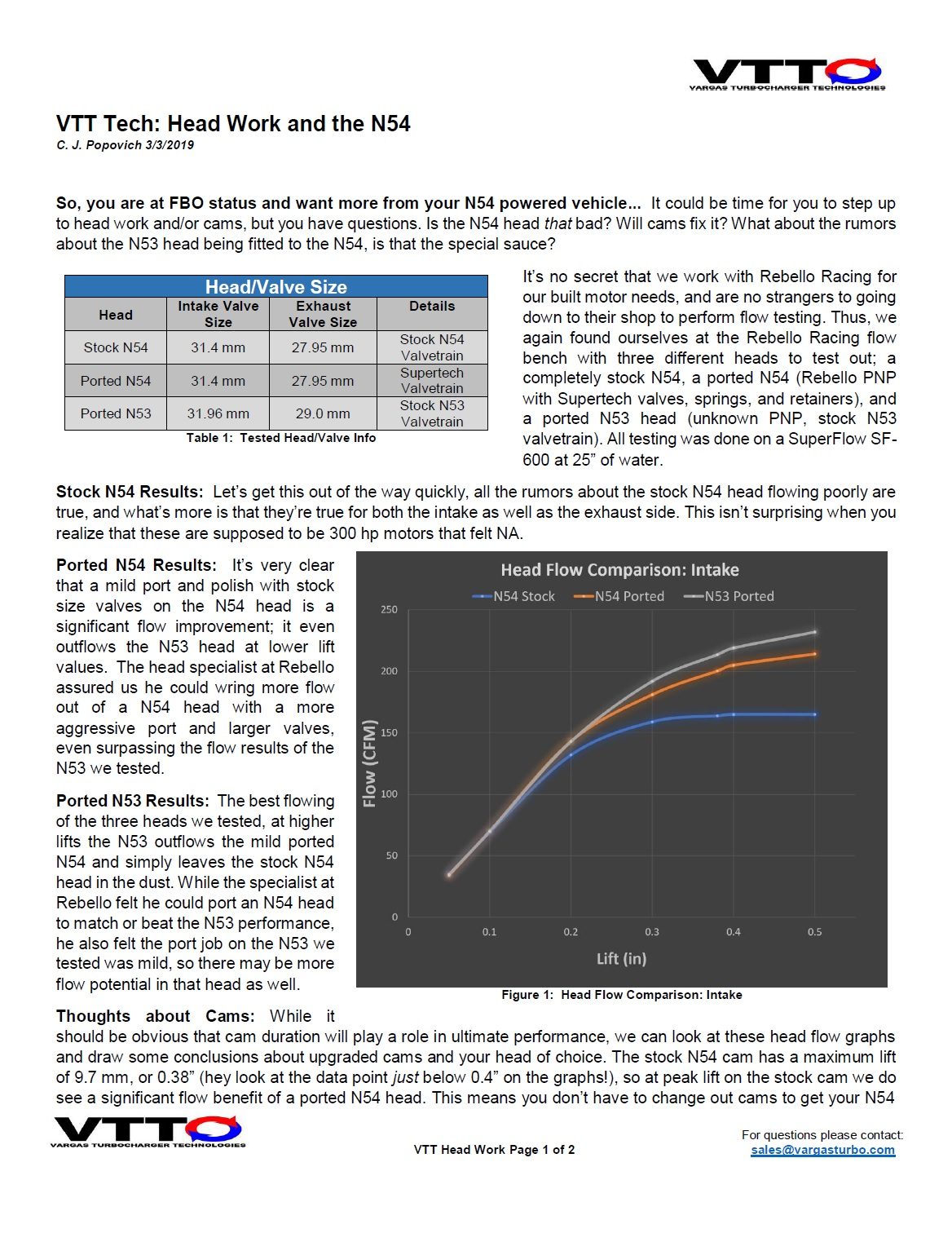
Stock N54 intake
The stock N54 curve climbs at low lift but flattens early, limiting power as boost and RPM rise.
Ported N54 intake
A mild port & polish with stock valve sizes shows a large CFM gain across the lift range and can outflow a mild N53 at lower lift. This is why a well-done PNP N54 head is such a strong value move for many builds.
Ported N53 intake
At higher lifts, the N53 continues gaining where the N54 starts to level off. That high‑lift headroom is the main advantage for very high power / high RPM goals.
Exhaust flow comparison
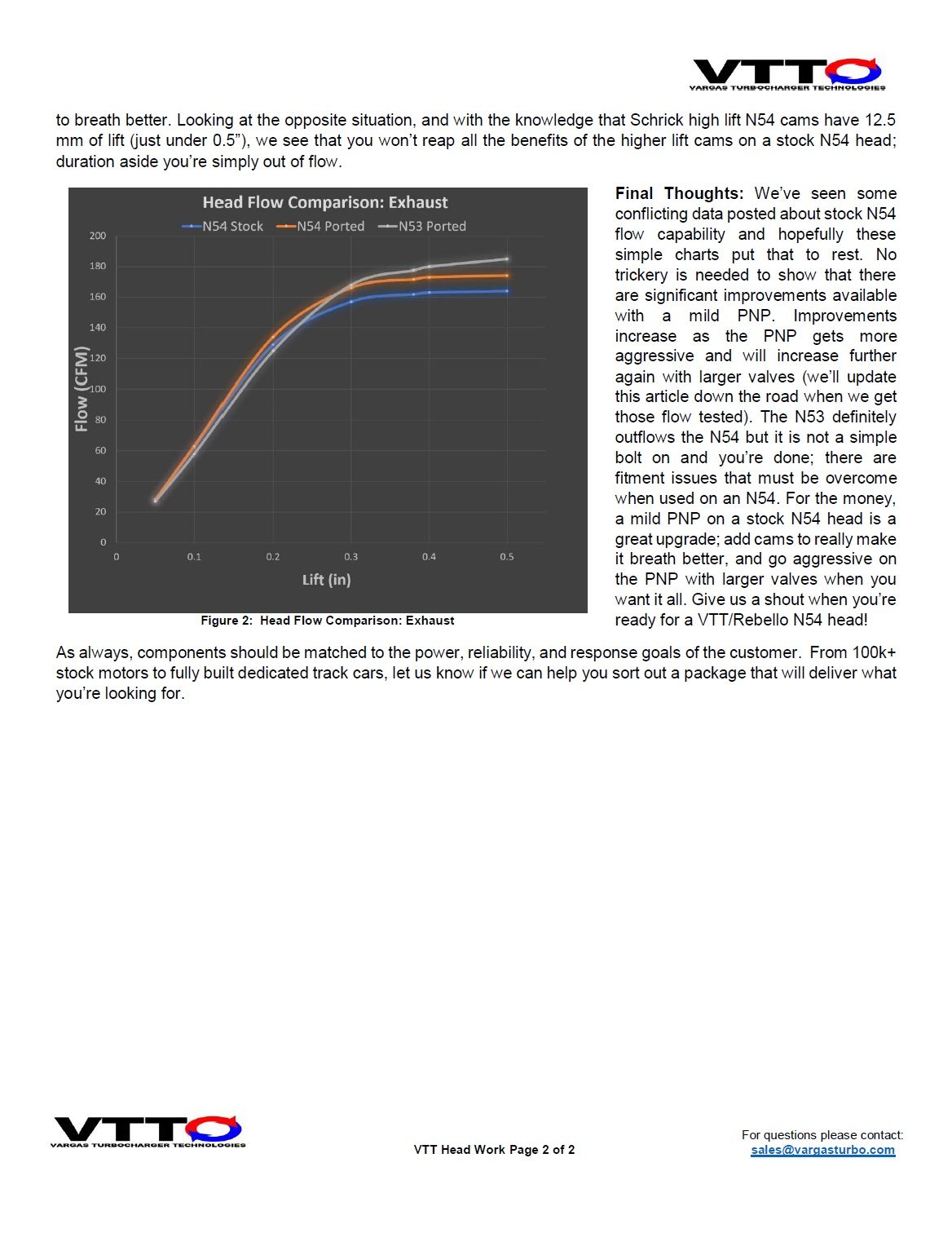
The stock N54 exhaust side also flattens early. Both ported heads track much closer together at higher lift (roughly ~170–180 CFM in this test range), which is good news for turbo efficiency because improved exhaust flow can reduce drive pressure and EGT.
Port geometry and port size measurements
The photos below show port entry measurements taken with a digital caliper.
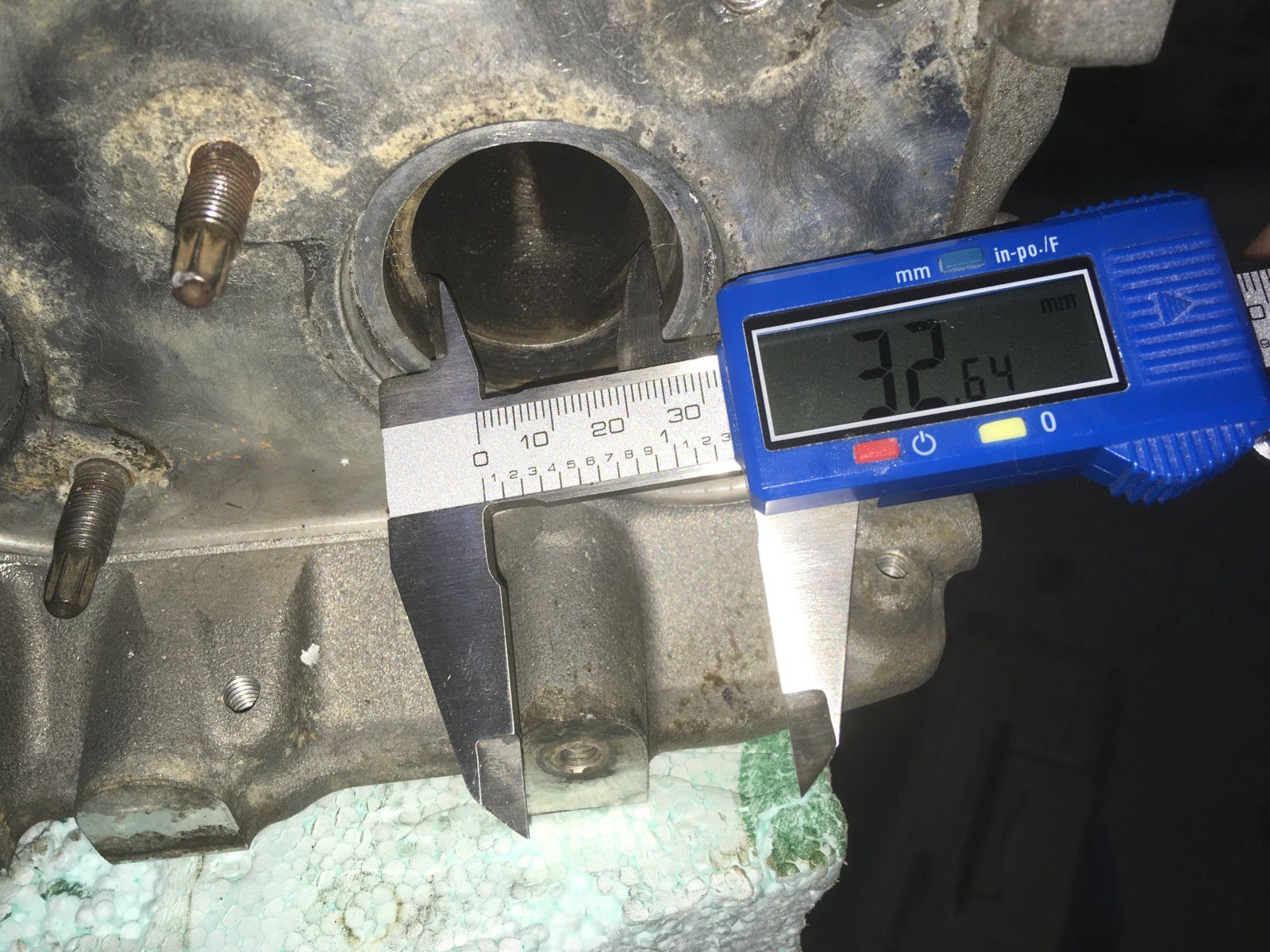
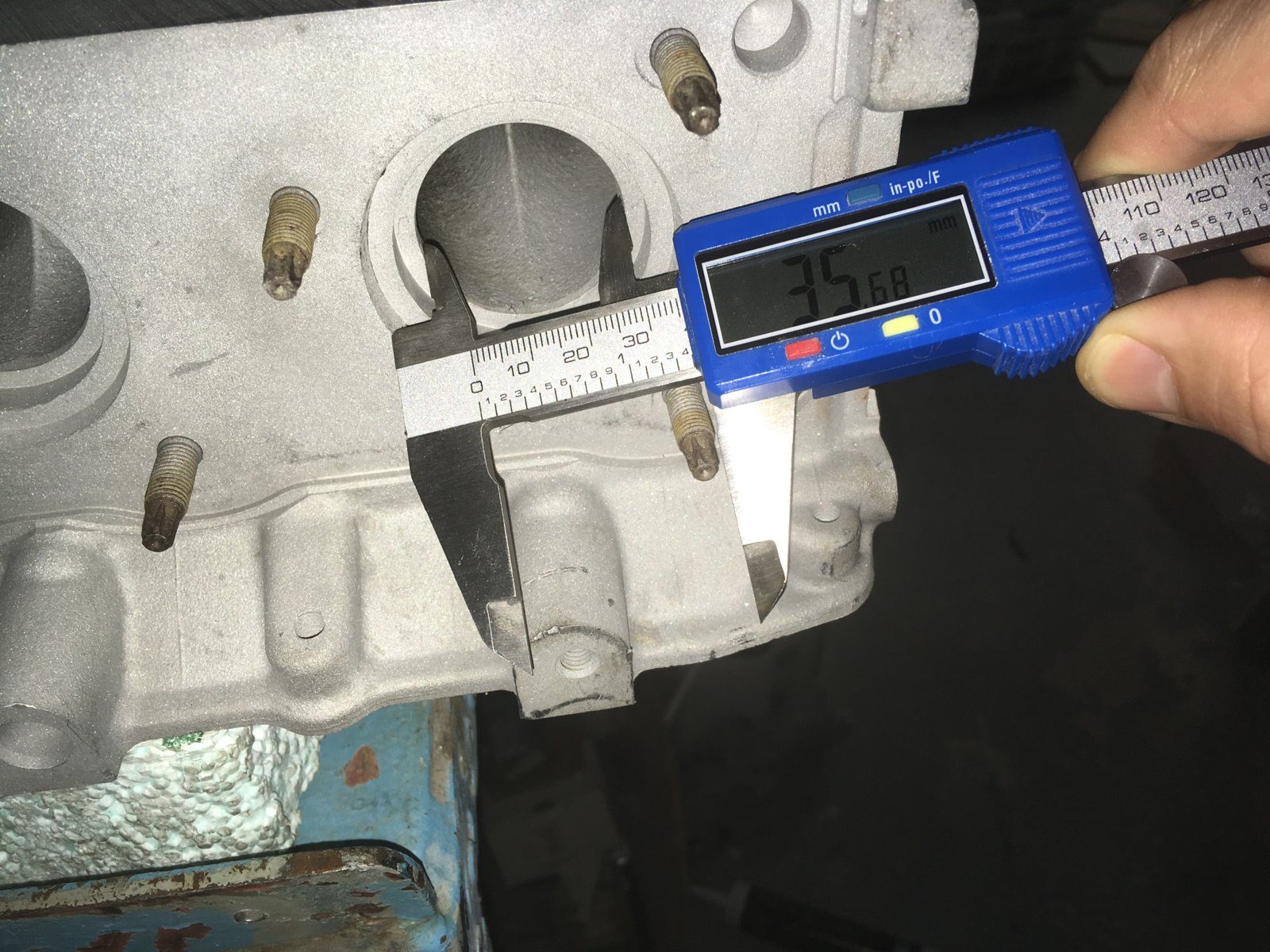
These measurements help explain why the N53-style port geometry tends to keep gaining at higher lift: more cross‑section and fewer choke points.
Cams and lift: why headwork works on stock cams
The stock N54 cam is roughly 9.7 mm (~0.38") lift, which lands right in the lift region where ported heads show the biggest separation from stock in the intake chart. Translation: you can see meaningful gains from headwork without cams.
High‑lift cam profiles (approaching ~12.5 mm / ~0.5") can add power, but only when the head can keep flowing at higher lift. On a stock N54 head, you’re often simply “out of flow” before you fully benefit from the extra lift.
Ported N54 vs N53 swap: what to choose
| Goal | Ported N54 head | Ported N53 head swap |
|---|---|---|
| 500–650 whp street/track | Best value; bolt‑on fitment; big improvement | Works, but swap complexity may not be worth it |
| 700+ whp big turbo | Needs aggressive porting and/or larger valves | More high‑lift headroom; best ceiling |
| Install complexity | Direct replacement | Requires addressing exhaust port/manifold fitment differences |
| Calibration | VE/load, WGDC, timing/cam optimization | Typically more extensive remapping to match airflow changes |
How we use this data in calibration
Flow-bench numbers don’t make power by themselves—calibration does. For ported heads and N53 swaps, we typically rescale load/airflow models, refine boost control for the reduced restriction, and optimize ignition/cam phasing where the improved breathing reduces backpressure and improves stability.
If you want us to map out a path based on your exact hardware, fuel, and power goal, send your mod list and logs and we’ll recommend the cleanest next step.
FAQ
Pick your platform, select your hardware stage, add what you need, and checkout to start intake immediately.
Get a Quote →